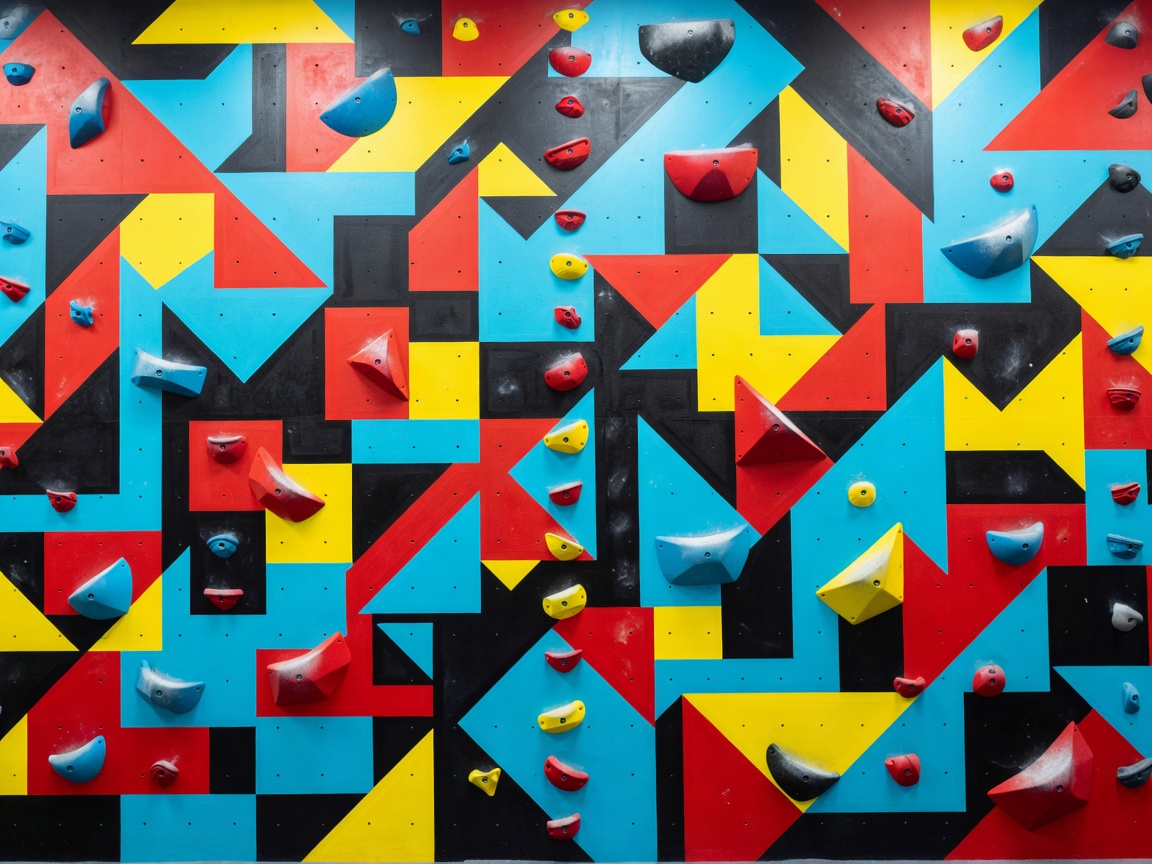
What changes when the wall becomes a route?
Climbing begins with an obvious fact: hands and feet must solve a vertical problem. Yet the disciplines diverge quickly. Indoor bouldering concentrates movement into short, protected sequences. Sport climbing adds a rope and fixed protection. Traditional climbing asks the leader to place removable protection in the rock. Alpine climbing adds long approaches, changing conditions and the complications of a larger mountain.
What is the real difference between bouldering and roped climbing?
Bouldering is usually close to the ground, with landing mats and no rope. The physical question is often intense and compact: balance on a smear, a reach to a hold, a sequence that only works when hips turn at the correct instant. It is social because attempts are visible and brief. People watch, suggest a foot change, then try a different answer.
Roped climbing extends the problem. Belaying becomes part of the activity: one person manages the rope while another moves. Communication, attention and compatible habits matter as much as grip strength. On sport routes, bolts provide established protection; the challenge lies in clipping efficiently, reading the line and managing fatigue. On traditional routes, placing gear introduces another layer of assessment. Rock quality, crack shape and rope drag all matter.
Why do climbers talk so much about movement?
Because strength without position is expensive. Good climbing frequently looks unhurried: weight rests over the feet, arms remain straighter where possible, and the body rotates to bring the centre of mass nearer the wall. A climber may pause not from indecision but to read the next few moves. The vocabulary—flag, drop knee, mantle, match—describes practical shapes rather than secret codes.
What does outdoor climbing add?
Outdoor rock is not an indoor wall with weather. Holds can be subtle, descents can be awkward, and other users may be nearby. Local access arrangements, nesting restrictions and rock care are part of the day. A route description helps, but does not replace looking at the ground, the forecast and the abilities of everyone involved. Established clubs and qualified instructors can provide a sensible introduction to the systems involved.
Who tends to enjoy climbing?
Climbing attracts puzzle-solvers, people who enjoy incremental progress, and those drawn to shared responsibility. It also accommodates different ambitions. One person may be absorbed by a quiet circuit session; another may plan long routes. The culture has room for both, provided the basic courtesy remains: check your systems, give others space, and do not treat caution as a failure of nerve.
Why does it hold attention?
The feedback is unusually direct. A small adjustment can change an impossible move into a manageable one. There is also a durable humility to climbing: conditions, technique and attention can all vary from one day to the next. That uncertainty is not a defect to overcome. It is the reason a familiar wall can keep offering new work.